



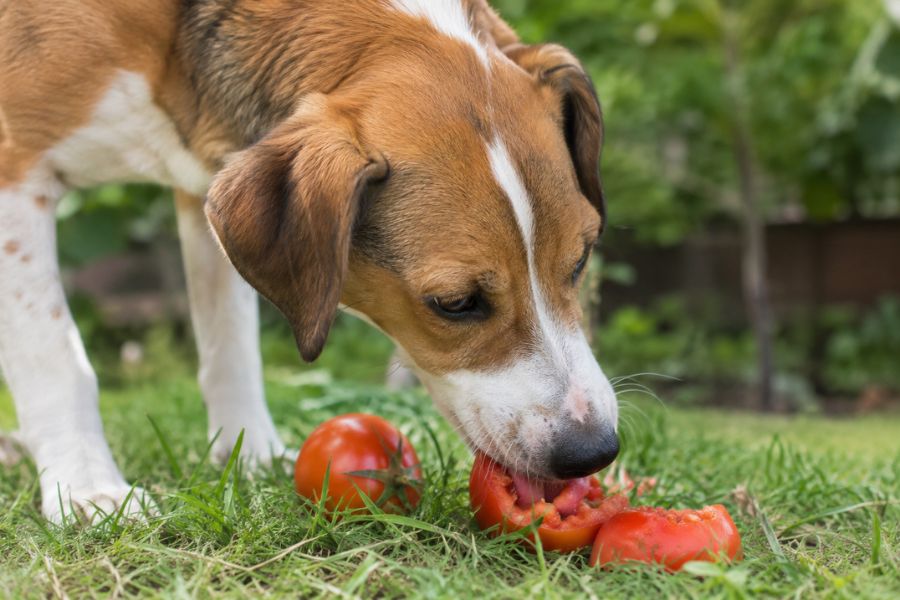
Tomatoes can be safe for dogs in moderation, but the answer depends on ripeness, quantity, and preparation. Ripe red tomato flesh is generally considered safe as an occasional treat. Green tomatoes, stems, leaves, and large amounts can create problems because they contain higher levels of tomatine.
This guide covers safe servings, poisoning signs, foods to avoid, and when help is needed.
Can Dogs Eat Tomatoes?
Healthy adult dogs can usually eat pieces of ripe, plain tomato. The flesh contains water, fiber, vitamins, and antioxidants. Tomatoes are not necessary, so treats should remain occasional.
A dog’s reaction can vary. A sensitive stomach may respond with vomiting, loose stool, gas, or discomfort after eating unfamiliar foods. Dogs with specific dietary restrictions may need a different approach.
Ripe Tomatoes vs. Green Tomatoes
Ripe red tomatoes contain much less tomatine than unripe green tomatoes. Tomatine is a natural compound found throughout the tomato plant, with higher concentrations in green fruit and plant parts.
Small exposure to ripe red tomato flesh is unlikely to cause poisoning in most dogs. Eating green tomatoes, a large quantity of tomato plant material, or concentrated products deserves more attention.
Are Tomatoes Toxic to Dogs?
The phrase “tomatoes are toxic to dogs” is too broad. Tomato plants contain tomatine, but toxicity risk depends on the part consumed and the amount eaten. Ripe fruit has relatively low levels. Stems and leaves contain more.
A dog that steals one ripe tomato from the kitchen is in a different situation from a dog that chews through a garden plant. Your dog’s size, health, and symptoms matter too.
Signs of Tomato Poisoning in Dogs
Watch your dog after suspected ingestion. Possible signs include:
- Vomiting or diarrhea
- Drooling
- Loss of appetite
- Weakness or unusual tiredness
- Abdominal discomfort
- Poor coordination
- Tremors
- An abnormal heart rate in serious cases
Mild stomach upset can occur without true poisoning. Severe symptoms require attention. Do not wait for symptoms after substantial plant ingestion.
What Parts of a Tomato Are Safe?
Tomato Flesh
Plain, ripe red tomato flesh is the safest option. Wash it, remove the stem, cut it into pieces, and offer a modest, plain amount.
Tomato Stems and Leaves
Skip stems and leaves. These parts contain more tomatine and are not treats for dogs.
Green Tomatoes
Avoid feeding green tomatoes. Their higher tomatine content makes them a poor choice.
Canned, Sauced, or Seasoned Tomatoes
Human tomato products require caution. Pasta sauce, pizza sauce, canned meals, salsa, and soups may contain onion, garlic, excessive salt, sugar, or spices. Onion and garlic can be harmful to dogs. Plain tomato products without unsafe additives are preferable, but fresh ripe tomato remains simpler.
How Much Tomato Can a Dog Eat?
Portion size should match your dog’s size and overall diet. A small dog may need one or two pieces. A larger dog can tolerate a few more pieces. Treats should remain a small part of calories.
Introduce tomato in a small amount. Monitor stool, appetite, and behavior. Stop if digestive problems appear. Your dog’s diet should provide nutrition.
What Should You Do If Your Dog Eats a Tomato?
Find out what was eaten, how much was consumed, and whether the tomato was ripe. Check for stems and leaves. Save the packaging if the food was canned, sauced, or seasoned.
Do not induce vomiting unless a qualified professional specifically tells you to do so. Contact your animal health provider when your dog has eaten a large amount, consumed tomato plants, or develops concerning symptoms. Prompt veterinary care can determine whether monitoring or treatment is appropriate.
When Tomatoes Become a Bigger Concern
Risk rises when ingestion involves an unknown quantity, multiple green tomatoes, plant parts, or a dog already showing symptoms. Puppies, senior dogs, and dogs with ongoing health or dietary issues may need individualized guidance.
A calm response is useful. Remove access to the food, note the approximate amount, observe your dog closely, and seek professional advice when the situation is unclear.
The Bottom Line
Ripe red tomato flesh can be an occasional dog-friendly treat when served plain and in small portions. Green tomatoes, leaves, and stems deserve caution because they contain more tomatine. Tomato sauces and prepared foods can hide ingredients that are unsafe for dogs. Know what your dog ate, watch for symptoms, and seek professional guidance when the amount or situation is uncertain
Frequently Asked Questions(FAQs):
1. Can dogs eat raw tomatoes?
Yes. Most dogs can eat small amounts of ripe, raw tomato flesh. Remove the stem, wash the fruit, cut it into pieces, and serve it plain. Stop if digestive upset develops.
2. Can dogs eat cherry tomatoes?
Dogs can eat ripe cherry tomatoes in small portions. Cut them to reduce choking risk, especially for small dogs. Remove stems and avoid seasoned, salted, stuffed, or sauced cherry tomato products.
3. What happens if a dog eats a green tomato?
Green tomatoes contain more tomatine than ripe tomatoes. A small accidental bite may not cause serious problems, but larger amounts warrant professional guidance. Watch for vomiting, weakness, drooling, coordination changes, or tremors.
4. Are tomato plants poisonous to dogs?
Tomato leaves and stems contain higher concentrations of tomatine and should not be considered safe snacks. Significant plant consumption can cause gastrointestinal or neurological signs. Contact a professional promptly if your dog has eaten garden plant material.
5. Can dogs eat tomato sauce?
Plain tomato sauce may be tolerated, but many commercial sauces contain onion, garlic, salt, sugar, or spices that are unsuitable for dogs. Check ingredients. Fresh, ripe tomato is a safer, simpler treat.
6. Should I call a veterinarian after my dog eats tomatoes?
Call a veterinarian when your dog consumes a large amount, eats green tomatoes or plant parts, or develops concerning symptoms. Have the quantity, food type, and symptoms ready for discussion..